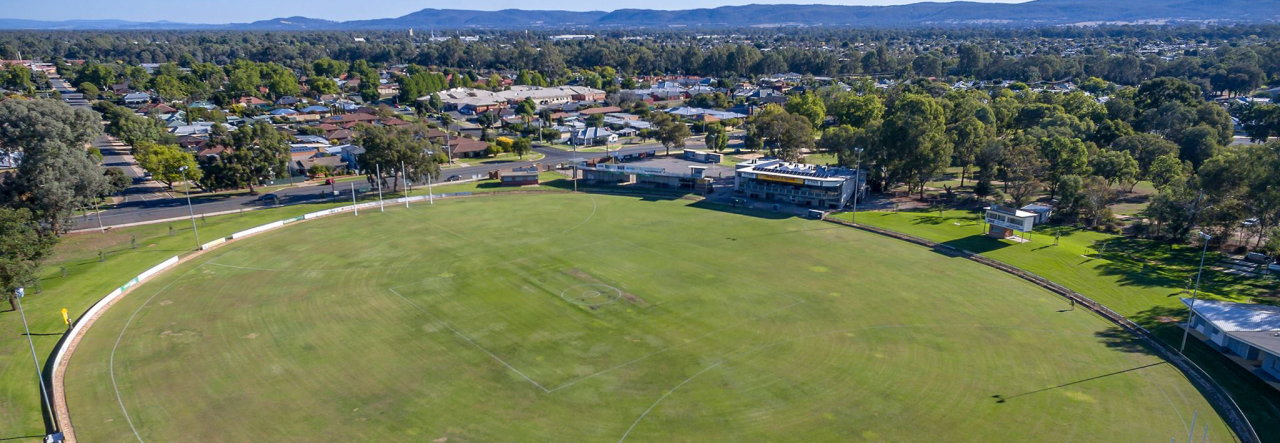
Featured

“THE YEAR MR.FOOTBALL CAME TO TOWN…..”

Everyone with the remotest connection to the Wangaratta Rovers was abuzz with excitement as spring gave way to the summer of late-1955……..

Mr.Football had come to town.

This wasn’t a whistlestop promotional visit at the behest of the VFL……No, the man popularly acknowledged as the best footballer in Australia had arrived – with his wife Elsie and sons Robert and Peter – to assume his appointment as the playing-coach of the Wangaratta Rovers……..

………………………………………………………………………………………………………………………………………………….

The procurement of Bob Rose to take the reins of the battling club stunned not only local fans, but footy people around the nation.

After all, the Rovers had been in existence for 11 years; had only gained admittance to the Ovens and Murray League in 1950 and, since then, had won only 34 of the 108 games they’d played.

It seemed ludicrous that Collingwood would allow their  champion player to be prised away by a bush club which appeared to have little or no credibility……..And secondly, that he didn’t take the offer presented by East Perth, who had promised to make him captain-coach – and the highest-paid player in Australia……..

Those were the unanswered questions……..But it was obvious that the Rovers had made a convincing presentation to the four-time Copeland Trophy winner.

The hunt for a top-line coach had begun months earlier, but once the Hawks got the inkling that Rose may become gettable, they made him their target.

In their favour was the fact that he had strong family ties in Victoria, which counted against a move to the west……..Also, as a lad brought up in Nyah West – a small Mallee township – he liked the prospect of moving back to the country.

When he began to warm to the Rovers’ approach they formulated a package which included a sports store proprietorship and a salary of 35 pounds per week to coach the club.

Many people warned that he would be foolish to forsake his future at Collingwood and also advised him of the numerous pitfalls of taking the job. …..

Included among these was the caution by a former team-mate to be aware that the Rovers were a ‘Catholic Club’…….He gave this little credence and decided that a trip to Wangaratta to give the town the ‘once-over’ would be a good idea.

Unfortunately, on his first attempt at the journey he had to head home, as he realised that his old Singer car wouldn’t handle the steep inclines of the Hume Highway’s ‘Pretty Sally’…….

He rang the Rovers to postpone the appointment and headed north the following week in a flasher vehicle, belonging to his brother Kevin .

……………………………………………………………………………………………………………………………………………………..

Manny Cochineas, a prominent Wangaratta businessman, who had become somewhat of a godfather-type figure at the Rovers ( akin to Albury’s latter-day patriarch, Colin Joss) was the man who planted the idea among his fellow officials that they should aim high and go for the best.

‘Cochy’ was a dreamer and relished the prospect of snaring Mr.Football, despite the odds seeming almost insurmountable.

Keith Ottrey, a star player of the fifties, remembered that the Rovers hierarchy did a great job of keeping the Rose-hunt under tabs……

“It was a bit of a case of …’don’t tell the Arabs’……” ‘Demon’ recalled years later. “We weren’t told a thing……..The only inkling I had that things were going all right was when I overheard ‘Cochy’ whisper to a bloke: ‘I think we’ve got him”.

With his mind almost made up, Rose decided that he’d make one last approach to the Collingwood committee; advising them that he’d been considering his future, and asking if they could possibly increase his salary.

When the ‘Pies refused to budge, despite pleading with him to stay, he confirmed that he was, indeed, accepting the Rovers’ coaching offer…..

So, when they received confirmation of this, the Rovers’ preparations moved into full swing for the 1956 season……..Bob and his young family settled into a small Housing Commission residence in Lamont Street.

It was hardly salubrious, but the Rose’s were unfazed. The Rovers later took ownership of a house at  102 Swan Street, which became their abode for the rest of their time in Wangaratta.

……………………………………………………………………………………………………………………………………………………

Tasked with setting up his new business and traversing the area on recruiting trips, life was pretty full-on for the new coach.  But he was buoyed by the enthusiasm of the Rovers people .The Sports-store Proproetor. The Sports-Store Proprietor. . The ex-Festival Hall boxer.

He had to sit through some drama at the Club’s Annual Meeting in late November, when President Harry Klemm faced a no-confidence motion, moved by his brother Tom……Harry was deposed from the position and was, indeed, voted off  the 23-man committee.

But that was barely a ripple on the landscape, as new members clambered onto the Hawk bandwagon. The club’s first practice match attracted a crowd of 1,000 to watch Bob Rose and a new wave of recruits, show their stuff .

Unfortunately, in the lead-up to Rose’s much-awaited O & M debut at Benalla, he suffered a groin injury and had to watch from the sidelines, as his old Collingwood team-mate Len Fitzgerald led the Demons to victory.

A fortnight later he took to the field against Wangaratta and, in a day of triumph, led the Hawks to a nine-point win against their arch rival……… He was chaired from the field by delighted supporters, who loved the influence he had exerted over his new charges.

Bob Rose (second from left) with Stan Trebilcock, John Tanner and Alan Bell, at a Rovers Ball.

After a slow start to the season, the Rovers won nine of their last 11 home and home games to sneak into the O & M finals for the first time.

Though beaten by Benalla in the first semi-final, Hawk supporters liked what they saw …….And they positively adored  the coach…….Club membership had risen from 325 to 670 in 1956 and a new breed of supporter gained a fascination  for  the Brown and Gold.

He was dubbed ‘King Bobby’. …….Italian tobacco-growers, who had previously shown scant regard for footy, were introduced to the game via the exploits of Rose, and called him ‘Bobby Rossa’……..

They were generous and loyal and many became Hawks for life.

To young whippersnappers like yours truly, he was bigger than Ben Hur. It was an era of scant exposure of VFL players; you were just reliant on newspapers and footy cards to bring them to life.

To have a superstar in our midst was beyond belief. We couldn’t wait for training nights and would race down to the ground to see what Club, or Interstate Guernsey he was wearing, or try to attract his attention whilst having kick-to-kick on the sidelines.

……………………………………………………………………………………………………………………………………………………….

The Rovers doubled their profit in 1956 and well and truly covered the financial outlay .But more importantly, Rose  developed a culture among the playing ranks which would set the standard  for decades to come . He had lifted the profile of the club to unforeseen levels.

In time to come he was to achieve fabulous personal and club success with the Hawks. Within two years the first of 16 Senior flags was fluttering at the City Oval.

It was the culmination of a dream for Mannie Cochineas and his mates, as Rose booted six goals, inspired his team to a 49- point victory over Wodonga, and he won the first of his two Morris Medals.

The Wangaratta Rovers 1958 Premiership Team.

After losing a pulsating 1959 Grand Final to Yarrawonga, the Hawks were triumphant the following year – again over Wodonga.

A serious back injury hospitalized the champ after he had battled with it for a good portion of 1961.

It seemed to signal the end of his playing days, and he announced his retirement – much to the dismay of the football world – at season’s end.

The Rovers swung into action and found his surprise replacement – controversial South Melbourne ruckman Ken Boyd, who was in the midst of serving a hefty 12-week suspension for striking Carlton’s John Nicholls.

Attempts were made to overturn the ban, considering that he was taking up his new appointment in the bush…….But alas, this was unsuccessful, and ‘Big Bad Ken’ was disqualified from playing or coaching for the remaining 8 weeks of his sentence.

The Hawks were faced with a quandary, and Rose offered to resume the role in a non-playing capacity……..Within weeks he’d decided to again pull on the boots……

Such was the success of his come-back that he’d racked up 26 kicks in the first half of his 126th, and final game- the 1961 Premiership decider.

But there was to be no fairy-tale ending for the legend…….A brilliant Benalla side held on to clinch a 7.14 to 6.10 victory.

Rovers‘ Morris Medallist’s Bob Rose, Neville Hogan, Rob Walker and Andrew Scott.

:

……………………………………………………………………………………………………………………………………………………….

He returned to Victoria Park as coach in 1964, to experience heart-ache of the highest order……losing Grand Finals by a handful of points in 1964, ’66 and 1970, before switching to Footscray for four seasons, and completing his 282-game VFL coaching journey with another two-year spell at Collingwood.

The car accident that rendered his son Robert – a Sheffield Shield batsman and League footballer – a quadriplegic, changed the dynamic of the Rose family, and Bob, Elsie and son Peter devoted themselves to his welfare for the remainder of his life.

Robert and his father made several visits back to the Findlay Oval for social functions over the years, and Bob’s final appearance on its hallowed turf came in 1998.

He was 69, rising 70, and the plan was that he’d make a token on-field appearance in a Past Players match, then mingle with the crowd for the remainder of the day.

He enjoyed it so much that he remained on the ground for the entirety of the game.

Five years later, the old champ passed away, aged 74………….

 Bob Rose ( second from left, middle row ) lines up in the 1998 Past Players’ Game.


Featured

THE ALL-ROUNDER, THE IMPORT, AND THE COACH WHO STAYED

The Wangaratta Football Club has existed, in some shape or form, for more than 128 years.

Its history reveals stunning highs, cataclysmic lows, and the usual dramas and controversies that beset all sporting organisations.

A handful of the game’s greats have worn the Black and White……There have been characters, rascals and undesirables – and people of great devotion and unswerving loyalty.

In short, there has been a smorgasbord of personalities.

Here’s a thumbnail sketch of three such ‘characters’, who turned out for the Pies in the early days of the 20th century……..

……………………………………………………………………………………………………………………………………….

  THE ALL-ROUNDER

Charles Bernard Meadway was 20 when he made his way into Wangaratta’s O & M side during the 1899 season. For most of the next 16 years he would prove to be one of the team’s stars – when he was available.

He was born in Dunedin (N.Z) and his family moved to Australia six years later. The Meadways resided in Bendigo, before eventually settling in Wangaratta.

His sporting career ran parallel, in some respects, to that of the legendary Bill Hickey, who is regarded as possibly the town’s finest all-round sportsman.

But Bernie wasn’t far behind. A brilliant cricketer, he was the WDCA’s leading wicket-taker on four occasions, and hit four WDCA centuries. His ‘hands’ of 130, 150* and 143 indicated that he was partial to a decent stint at the crease.

But his stand-out knock came in 1907/08 when he hammered 210* for Wangaratta against Oxley. It remains the fourth-highest individual WDCA score. For good measure, in the same match, he took 11 wickets.

Later that season, he was selected in a Victorian Country Cricket team, which played a match against the Melbourne Cricket Club at the M.C.G.

Years earlier, on the eve of the 1902 footy season, Bernie appeared set for a lengthy absence from the sporting arena when he enlisted to fight in the Boer War. Fortunately, a month later, peace prevailed and he returned to the playing ranks.

During the early 1900’s Wangaratta alternated between the O & M.F.A and the Ovens and King District Association. After playing his part in an O & K flag in 1905, it was announced that Meadway had made his last appearance, as he would soon be playing with Carlton.IMG_4046

But, after just one game with the Blues, he was back with Wangaratta, and helped them to another flag.

Collingwood lured Bernie down for a run the following season. Reports filtered back that he had been constantly mentioned for his brilliant play in his VFL games. But inevitably, the boy from the bush returned home after three games.

It was the sport of Trap-Shooting that captured his attention and prompted lengthy absences from the Wangaratta side.

His effort of ‘grassing 23 sparrows in a row, and 108 birds without a miss, gave Meadway a world-record in 1907.

‘He used ballistic powder and a beautiful Clarborough and Johnstone gun,’ stated the Chronicle. But in a sombre message, which would have caused some heart-ache to Wangaratta fans, they reported that he intended to retire from football to concentrate on Sparrow-Shooting.

This, however, proved a fallacy. Bernie continued to combine his shooting excellence with regular cricket and football appearances.

After one exciting victory in 1912, a supporter rushed into verse to laud the performance of the Wangaratta side:

“Come let us join together, boys, and sing to all a song.

Of how we play at football and roll the ball along,

Of how we beat Moyhu, who thought they were too strong –

When we’re playing to be Premiers.

“Gil Ebbott is our rover, boys, for ever on the ball.

He can travel with the best of them- the daddy of them all.

When Meddy runs at a man, then someone’s sure to fall.

When we’re playing to be Premiers………….”

Bernie Meadway was 36 years old, and still single, when he played his last game for Wangaratta, during the 1915 season. He enlisted with the AIF and joined the Remount Unit in the deserts of the Middle East.

He returned from the Great War in 1919, to become a successful businessman and continue his shooting career. He won the first of his six Australian Championships in 1920, and competed on three occasions against the world’s best at Monte Carlo……….

…………………………………………………………………………………………………………………………………………

THE ‘FLY-BY-NIGHTER

Bernie Meadway, in his handful of games in 1915, would have no doubt made the acquaintance of Albert Hezikiah (Vernon) Bradbury, who was one of the most ‘colourful’ identities ever to be lured to the Wangaratta Football Club.

Bradbury was a flamboyant midfielder/forward, who made three appearances with St.Kilda before being lured to Footscray in 1910, aged 20.IMG_4047

The Footscray  Advertiser reported in 1914 that: ‘The football Oval was the stage from which Banbury kept crowds entranced with his wizardry.’ . ‘He marked, feinted and twisted with a nonchalance that often left his opponents flat-footed and humiliated. There are few footballing dodges of which he is not the master……’

The champion, whose favoured position was centre half forward, once hit the post seven times in a match against Port Melbourne in 1912 – a record which still stands.

He was a star in Footscray’s 1913 premiership victory, but was one of 5 players sacked by the Club when they played abysmally in the 1914 Grand Final. It had been alleged that more money changed hands in that game than any other in the VFA’s history.

IMG_4041
Footscray’s 1913 VFA Premiership team. Vernon Banbury is far right, middle row.

So, when Wangaratta were looking to bolster their ranks upon being re-admitted to the O & M, they sought the services of the mercurial star, who had become available – and reportedly amenable to the lure of a ‘quid’.

The spectre of War hung over the O & M in 1915. There was some conjecture as to whether matches should continue whilst fighting raged overseas, but nevertheless,  the season rolled on.

The Magpies chalked up a handful of wins – and a draw against the all-powerful Rutherglen. But their most exciting victory came in a heart-stopper against contenders Albury.

With minutes remaining, Edwards kicked a goal to bring Wang within a point. The sides drew level, then Banbury, displaying his great skills, evaded several opponents to snap the winning behind.

He had been a more than handy player with Wangaratta, but, upon the abandonment of the O & M at season’s end, because of the War, he returned to the city.

Vernon found his way back to Footscray, and featured in their successive VFA flags of 1919 and ‘20. He resigned briefly during the latter season when supporters accused him of playing ‘dead’.

By now his life was in disarray, and his reputation as a playboy had cast him as a controversial figure. Overlooked for the 1922 Grand Final, which Footscray lost to Port Melbourne, he was subsequently disqualified for life by the VFA, for the attempted bribery of Port players.

The erratic career of Vernon Banbury took another turn when, in a defiant gesture towards the VFA, the Footscray Football Club bestowed Life Membership upon him at their next Annual Meeting.

Eighty-two years later, in 2010, he was admitted to the Western Bulldogs’ Hall of Fame………

………………………………………………………………………………………………………………………………………….

THE COACH WHO STAYED……

Matt O’Donohue was Banbury’s team-mate, and another of the Footscray players who had become embroiled in the bribery scandal that emanated from their 1922 Grand Final loss.

It was alleged that the lightly-built rover and Bulldog vice-captain had offered an on-field bribe to a Port Melbourne opponent, George Ogilvie. It came as a shock to Footscray fans, who had come to love and respect the local lad. Thankfully, the charge was not sustained.IMG_3836

But O’Donohue had already decided to move on. He accepted a coaching appointment with Wangaratta, and was introduced to a welcoming crowd at the club’s March 1923 Annual Meeting.

He proved an inspiring leader, and introduced a slick, systematic, running game, with an emphasis on handball, which troubled all sides.

His own form was quite outstanding, although he was to come in for his share of rough treatment during the season.

Unfortunately, for O’Donohue’s coaching aspirations, he ran slap-bang into the fabled St.Patrick’s line-up.  ‘The Green Machine’, in the midst of a Golden Era, proved too strong for Wang in the 1923 Grand Final and triumphed by 17 points.

After the Pies  finished runners-up again the following season, he handed over the coaching reins to Percy ‘Oily’ Rowe in 1925, but continued to be one of the ‘big guns’ in a team which boasted stars on every line.

He and big ‘Oily’ proved a lethal ruck/rover combination and played a major part in Wangaratta snaring their first O & M flag. Fighting back from a sizeable quarter-time deficit, they out-pointed Hume Weir by 21 points .IMG_4043

O’Donohue’s class at the fall of the ball was recognised the following season, when he was selected to rove to Rowe in the O & M’s representative clash against the VFL at the Albury Sportsground.

His swansong game with the ‘Pies came in their resounding 14-goal defeat at the hands of St.Pat’s. It was his fourth successive O & M Grand Final, and  a sad farewell for the veteran.

He sated his sporting urges by playing cricket and golf, but continued to follow the fortunes of the footy club with a keen interest.

Arthur Callender, the respected administrator who had engineered Matt’s move to Wangaratta, had become a close confidant, and coaxed him into becoming his off-sider in some of the sporting organisations with which he was involved.

At one stage Matt was concurrently Secretary of the Athletic, Turf and Speed-Coursing Clubs, whilst Callender held the role of President.

When the outbreak of World War II forced the disbandment of the Carnival in 1940, it terminated O’Donohue’s reign as Secretary. He had held the position for 17 years, and had become renowned for his contribution to sport in Wangaratta……….


*With assistance from ‘UNLEASHED’, the Western Bulldogs’ History”

“ HAWKS TOSS TIGERS IN MATCH OF FLUCTUATING FORTUNES…..”

Cricket season got underway in Wangaratta yesterday……..

As a matter of custom I’ve popped down to the Findlay Oval to catch a glimpse of the ‘Game of the Round’ between Rovers-United-Bruck…. and Ovens Valley who’ve been acknowledged in some quarters as the early WDCA flag favourites.

Evans Street is teeming with foot traffic, but alas, they’re all heading to the Annual Show across the laneway……..A solitary spectator occupies the Hogan Stand as play commences……

The bloke spruiking at one of the side-shows provides a loud-mouthed backdrop to the normal village-calm of a game of cricket; as do the flashing lights; and a monster Ferris-Wheel which rotates for most of the afternoon……

………………………………………………………………………………………………………

RUB have won the toss and, in the spirit of cultural amalgamation ex-South African Nicholas Jardim is accompanied by Sri Lankan left-hand dynamo Charith Perera – to face the music against Ovens Valley’s new-ball pair.

Jardim had previously plied his all-round skills at Tallangatta, and sets about making an impression.

He keeps pace with the swashbuckling Perera……The pair had added 43 at a rapid pace before newly-introduced medium-pacer Chris Egan snaps him up for 19.

Egan manages to both stem the tide, and make inroads to the Hawk batting line-up……

He’s another of the game’s debutants, and has oodles of experience……He came to the Valley from the highly-rated Ballarat Cricket Association, where he had captained the Ballarat-Redan club for several years.

He puts his stamp on the game by removing RUB skipper Matt Whitten for a duck, then claims the prize scalp of Perera for 27.

The Hawks suddenly find themselves in a precarious position when Egan gets through the defences of the always-dangerous Jacob Schonafinger, and another newcomer Adam Jacob is caught in front by left-arm spinner Geeth Alwis.

Jeremy Wilson decides on a slowly-does-it approach, but when he too, is adjudged LBW, the home team have plunged to 6/83, and are precariously placed.

Enter the familiar figure of Lapriya Shantha Gangabadawatta Arachchilage, who steps nonchalantly onto the arena upon which he has produced many a gallant salvage mission in the past.

After many years with RUB, the 46 year-old ‘Lucky’ moved to Melbourne but, after a year, pined for his adopted home, resuming his spot in the middle-order and donning the ‘keeping gloves.

There’s the sense that ‘things are in good hands’ when you see ‘Lucky’ striding to the crease, and on this occasion, his stand with Dean Shaw was about to change the shape of the game.

Shaw is another who has been around for a considerable time but has spent most of it guiding younger players in the lower divisions.

But he was about to play his finest A-Grade knock for the Club…….

………………………………………………………………………………………………………

Almost from the moment they got together, the ‘Dean and Lucky Show’ was on song…..

And particularly so, after Chris Egan’s spell had ended with the miserly figures of 9/3/26/4.

Shaw surprised with the steady hand with which he negotiated proceedings, while Lucky’s game is based around attack…….He verified the opinion I’d held that there has been no better RUB bat to watch over the last decade or so.

The next hour and a bit, was transformed from a delicately-placed position to one of authority…….Shaw finished unbeaten on 63, with seven fours, while Lucky’s 53 off 50 balls included only two boundaries, but was full of deftly-placed driving and cutting, which continually pierced the field.

They had added a 110 runs for the seventh-wicket when time elapsed.

…………………………………………………………………………………………………….

The target of 193 was always going to be reliant on Geeth Alwis producing a masterpiece for the boys in Orange and Grey.

There was no doubt that the ‘gun’ was eminently capable, but would his team-mates be able to render the necessary support ?

Things progressed steadily against the accurate RUB opening pair, Ryan Barnes and Jacob Schonafinger, but when Matt Winter relieved ‘Schona’ from the Town end, things started to happen.

Winter is another who has returned to RUB after a brief hiatus, and the slimly-proportioned, quick-moving medium-pacer has always been a whole-hearted performer.

But he could hardly have visualised his immediate good fortune when, upon broaching the crease, he skittled Chris Egan and had the promising Noah White caught, in successive deliveries.

And when the accurate Barnes dismissed Thomas Chettleburgh, the visitors had slumped to 3/25……..The game was slipping away from OVU.

The diminutive left-hander Alwis slowly built into his innings, but there was never any doubt that he was completely in charge.

He’s a complete batsman…….As good as you’d see around here……..But the task of staying in the contest was becoming exceedingly more difficult, as he continued to lose batting partners

Firstly, his skipper Seamus Phillips became another ‘Frosty’ Winter victim; then Riley Forde, who’d been enterprising, fell to a juggling catch in slip…….. spinner Jeremy Wilson’s first victim.

His brother Connor found himself well out of his crease, misjudging a run that was never there……He spent a quarter of an hour afterwards in ‘solitary confinement’, pondering the vagaries of cricket.

But worse was to come…….Daniel Saville was run out immediately after, and when young Louis Sanderson was clean bowled, OVU were 8/83, with Alwis watching on helplessly from the other end.

………………………………………………………………………………………………….

All the while, oblivious to the action, half a dozen kids had been engaged in a pick-up match on the boundary’s edge, right in my eyeline……..

I found myself distracted…… admiring the skills of a couple of tiny Alwis kids, instead of concentrating on the old man’s rescue mission in the middle.

Geeth didn’t look like making a mistake, as he attempted to guide his side back into the match…….

In a 37-run eighth-wicket partnership with Joe Monk, then a 39-run last-wicket stand with James Neary, the realistic chance was looming that OVU could come back from the dead.

Both players lent valuable support, and the visitors needed 35 runs from four overs; not an impossible target had Geeth been able to commandeer enough of the strike.

But when Neary played all over one from Bart Camm, OVU had fallen for 159……..

Matt Winter (3/34) and Jeremy Wilson (3/15) did the bulk of the damage, but Geeth Alwis had breathed life back into the game with his magnificent, undefeated 85 off 83 balls……

“THE GREATEST OF THEM ALL………..”

‘You can argue all night….

But no-one will be right….

About who was the Greatest of them all……..’

……………………………………………………………………………

Earlier this year ‘On Reflection’ was asked to compile a list of the Wangaratta Rovers greatest players……

Perhaps I should re-phrase that………The original question that precipated this project, was : ‘Where does present-day coach Sam Murray stand among the pantheon of the Hawks’ best-ever ?

Well, I don’t regard myself as a good enough judge to make that assessment, so I posed the question to a few Club loyalists whose opinions I valued.

They all agreed that, yes, Number 13 is an absolute ‘gun’, and he’s certainly worthy of being among the list, but there are a few champions in front of him at the moment.

We were originally asked for our top 5 ATG’s, but we stretched it out to 12………Even then, we felt guilty about leaving out several stars of the game……..

Our criteria was: 1. Versatility…..2. Durability…….3. Capacity to impact a game…..4. Personal Achievements……5. Ability to be a star in any Era…..6. Influence on and off the field…….. 7. A reasonable number of Games.

So here it is:

1. BOB ROSE: A lay-down-misere’ . After all, when a bloke arrives up here at 27, with the pseudonym of ‘Mr.Football’ and wins dual Morris Medals, four Club B & F’s, takes the Club to two flags in its first decade in the League, and is attributed with developing the club’s winning culture, he takes some beating…..

He was a tough, and ferocious competitor, a magnificent kick, was dynamic round goals ( he kicked 294), merely toyed with opponents on most occasions, and had the innate ability to lift his team-mates with his skilful play.

Besides that, as the song goes, ‘people would come from miles around, just to see him play’…… In his 126th – and last – game, the 1962 Grand Final, he’d gathered 27 kicks by half-time.

2. ROBBIE WALKER: He was an absolute star at centre half forward, where he won the first of his Morris Medals, but was well-nigh unstoppable when he moved onto the ball and picked up another four Medals.

Polled what is surely a record 251 umpire’s votes in his 307 games and, for good measure, won 12 Bob Rose Medals.

His work ethic, during games – and at training – set the example for team-mates…..A lot of them became better players because of Robbie’s presence.

He possessed a great thirst for the contest. Team-mates reckoned that when the Hawks were being challenged they could see the glint in his eye, and knew he was going to do something. One rival coach said: “You had to virtually concede that you just couldn’t contain him.”

3. NEVILLE HOGAN: Loved footy with a passion……His left boot could cut an opposition side to pieces with the precision of a surgeon. Opposition sides found the mid-fielder really difficult to contain, such was his ability to read the play.

A superb footy brain made him a coaching success during the last half of his career, whilst still playing terrific footy.

Six flags, four B & F’s, 242 games, and the 1966 Morris Medal, are just the statistical details.

4. STEVE NORMAN: Was a goal-kicking genius, and as responsible as anyone for the Rovers remarkable run of success in the ‘70’s.

The knack of being able to ‘read’ the playing-styles and kicking patterns of team-mates further afield made his job look easy…….His telepathy with the likes of Hogan, Flynn, Pollard and Scott was uncanny.

Steve’s speed off the mark was a great asset, but for a fellah who stood just 6’ tall he could mark with the best of them….And his drop-punt kicks were deadly accurate.

Played 242 games, kicked 1016 goals, including six or more in 68 matches, and figured in 7 flags for the Hawks.

5. MERV HOLMES: Made the 150-mile weekly round trip from Carboor for 15 years to pursue his 302-game career with the Hawks.

He never knew anything other than playing in defence, so never went through the experience of having a tough, unyielding, unflappable, hard-hitting, super-competitive centre half back like himself breathing down his neck.

Team-mates stood tall when Holmes was in their midst, and he played a key role in six flags. His leadership qualities were renowned……He became vice-captain in 1977, skipper in 1982 and captain-coach in 1985.

ANDREW SCOTT: Rovers fans were instantly fascinated with the new copper in town when he arrived in 1975…….So were the O & M umpires as, within 12 months he had a Morris Medal draped around his neck and a premiership to his name.

He was a natural ruck-rover, but early on, was sent to centre half forward, as cover for the injured Daryl Smith. Despite being just 6’1” he constantly floated across the front of packs and took spectacular marks – à la Royce Hart.

When Scotty was switched back onto the ball he became an even more dominant player, starring on the big occasions – especially Grand Finals. He played in four flags in his first six years at the Club.

He kicked 248 goals in his 181 games, won two Bob Rose Medals, and was also runner -up once and third twice in the Morris Medal. Still a vital part of the Club.

7. MATTHEW ALLEN: When he was first recruited to the Hawks he had a disdain for being stereotyped as a backman…….But that’s where he made his name – as one of the League’s greatest defenders – during a career which spanned 26 years.

Playing on key opponents he was a master of timing, and rarely punched from behind.

He backed his judgement, generally took the front position, and few players could match him in the air.

Matty’s ungainly left-foot kicking style was often scoffed at, despite its effectiveness. His 362 games for the Rovers ( plus another 54 with Corowa-Rutherglen) were mainly spent in defence…..But he craved the opportunity to play up forward, and on the occasions he did, kicked 256 goals for the Hawks, including 83 in 1992.

In 2009 he wrote another chapter in a magnificent career, when he stepped up to coach the Rovers for two seasons.

8. SAM MURRAY: Proved himself to be a star when he first played, periodically, at the Findlay Oval. But he took his game to another level after assuming the coaching role in 2023.

You need only to judge his inspirational performances in the last three Grand Finals, when he seemed to be everywhere – charging out of the square, plucking saving marks deep in defence, and presenting as an option up forward – to realise why he has become a favourite of rusted-on Rovers fans.

After 101 games, and three B & F’s he is moving up the ATG list with a bullet.

Has the chance to add further lustre to his bulging record by equalling Mac Holten’s O & M record as the coach of ‘Four in a Row.’

9. NORM BUSSELL: Son of a King Valley dingo-trapper, he hadn’t played a game of footy at the age of 14, yet made his senior debut with the Rovers at 16.

Wiry, super-athletic, lanky and as tough as old boots, he was a dominant figure at centre half back in the Hawks’ ‘64 and ‘65 premiership teams. After winning the B & F two years later, he walked straight into a Hawthorn side which was labelled ‘Kennedy’s Commandos’ when it won the 1971 flag.

He returned to the Rovers after 114 games with Hawthorn, to begin the second phase of his career at the Findlay Oval as the club’s ‘hard-man’, playing mainly on the ball.

Starred in both the ‘74 and ‘75 premierships, won another B & F…..A knee injury drew the curtain on his 143-game stint at the Club during 1976.

10. DARYL SMITH: He was the ultimate utility player…….. In the first five seasons he spent with the Rovers, Smith was Neville Hogan’s ‘go-to’ man…….”If an opponent was giving us trouble, we’d always plump for ‘Smithy’ to shut him down. He’d play well wherever we put him, ” Hogan recalls……

Smith was at home at either centre half forward, or back, won successive B & F’s in 1973 and ‘74, and played in three flags in his first four years at the Club.

He vindicated his reputation for versatility by once kicking 5 goals at full forward for the O & M against a high-class VFA side…..When the Rovers were seeking a replacement for the retiring Hogan in 1977, Smith was their choice – despite recovering from a knee reconstruction.

He led them to a hat-trick of flags. He coached on for two more years, finishing with 195 games, and kicked 185 goals.

11. MICK NOLAN: During an era of fine O & M ruckmen, he was rarely, if ever, beaten . He began in 1968, and prompted club officials to ‘tear their hair out’ with his seemingly casual training attitude.

But once on the ground he was super-competitive and, when games were in the balance, would rarely go off the ball.

He was outstanding in the last three seasons with the Hawks, winning the B & F and playing a significant role in premiership wins in both ‘71 and ‘72.

His durability for a big man was indicated by his 101 games for the Rovers, 107 with North Melbourne, and 101 with QAFL club Mayne, whom he coached.

12. MARK BOOTH: For a small man he possessed a streak in his game which meant that he was always playing on the edge…….His pack-bursting ferocity and spot-on disposal saw him equally adept as a rover or flanker.

Rovers fans loved him for his knack of burrowing in to extract the hard ball – and mete out justice to opponents, even when it wasn’t required.

It cost him a spot in one Premiership side (1988), but he played his part in five others. Even in the final year of a career which spanned 19 years, he finished runner-up in the B & F – his tenth top-5 finish. He played 319 games ( plus 19 at Yarrawonga) and won two Bob Rose Medals.

A FEW OTHERS WHO CAME UNDER CONSIDERATION: Peter Tossol, Les Gregory, Mick Wilson, Ray Thompson, Laurie Burt, Eric Cornelius, Andrew Hill, Mick Caruso, Joe Wilson, Anthony Pasquali, John O’Donohue.

.

“MAGPIE LEGEND ‘BUSHIE’ REFLECTS ON THE ‘GOOD OLD DAYS’……..”

He’s nudging 92, the old champ……..I’m old enough to remember him as a high flying football ‘Swingman’ with a prodigious left boot…….a true personality of the game…..

His eyes light up when I knock on the door of his room at St. Catherine’s ……There could be no more appropriate time for a yarn, I suggest, considering that it’s Ovens and Murray Grand Final week…….and the arch rivals are pitted against each other…….

Bob Constable has a story or two to tell about an era when feelings between the Hawks and ‘Pies were at their most intense……

But firstly, let me provide the backdrop to one of the great O & M careers………

………………………………………………………………………………………………………

‘Bushy’ was born in Beulah, a tiny Mallee town which, in recent times, has gained exposure as the location for the 2019 film, ‘The Dry’.

At age14 he was off to boarding school at prestigious Caulfield Grammar, where his obvious sporting talent began to flourish, and he pursued his dream of a lifetime in Law.

After completing Matriculation, he joined the Crown Law Department, combining this with becoming a part-time student at Melbourne Uni, and playing footy with Amateur team Old Caulfield Grammarians.

“My uncle, Neil Stewart, suggested that I move up to Wangaratta to join his firm, with whom I would do my articles, study the 21 subjects required for a Law degree, and play football with Wangaratta……” he says.

Bob was 19…….Four years later he qualified as a barrister and solicitor, and in 1959 was admitted to the Bar, but by then he was far better known in town as a swashbuckling key position player for Wangaratta.

………………………………………………………………………………………………………

He had already been in the sights of League talent scouts, who had watched him in the occasional Amateur game, but in 1955, his first full O & M season, there were approaches from nine clubs.

They couldn’t help but be impressed with his performances in that finals series. For three successive weeks – the drawn Prelim Final against Yarrawonga, the Re-Play, and the Grand Final loss to North Albury, ‘Bushy’ was dominant at centre half back.

“We led North by four points at three-quarter time in that decider……..I’ll never forget it…..A gale-force breeze blew up, and a storm broke out over the Rovers ground, half-way through the last quarter.”

“North had pinched the lead back by then, and we found it almost impossible to score against the breeze…….They were content to play out time and hang onto a 3-point lead,” Bob recalls.

He represented the O & M the following year, in the Country Championship series at Bendigo…….

“ St.Kilda coach Alan Killigrew made contact and arranged to come up and see me the next week,” Bob recalls ……..”He said: ‘I watched that inter-league game, and I reckon you’re a ready-made League player.’ “

“He sat down in the office and waved a bundle of notes in front of me……..I’d never seen money like it………..I said: ‘Look, I’ll have to see the boss’…..”

“I could have predicted my boss, Bill Just’s response………He said: ‘Look young fellah…..You’d better make up your mind……You either play football, or you practice Law.”

“I went back to ‘Killa’ and said: ‘If you don’t mind, give your money to someone else’.”

……………………………………………………………………………………………………..

Bob also received a visit from Melbourne recruiting guru Ken Carlon…….

He’d already played a practice match with the Demons, in which he’d kicked six goals in the first half, suitably impressing the Melbourne officianados.

“They offered to transfer my Articles to a city lawyer, and do everything they could to further my career……They made no mention of money….”

“I must say, playing on the MCG was something else….running towards the boundary, with the huge stands in the background, you couldn’t help falling in love with it…….”

“I remember sitting in the empty Grandstand later that night, contemplating what might be……It was an extraordinary feeling……..I probably regretted forsaking the opportunity to play there, but I risked losing my career……”

The adaptability of the brilliant Constable was shown in the 1957 Grand Final, when the Pies were in dire straits. They’d trailed Albury from the first bounce, and the Tigers led by 25 points at three-quarter time.

Magpie coach Jack McDonald threw the magnets around, placing Bob Turner at centra half back, and switching Constable into the midfield.

It proved a master-stroke, as Turner came into the play, and Constable continually drove the ball forward.

With just a minute remaining he found, Morris Medallist – and the O & M’s Leading Goalkicker – Lance Oswald, who had been kept goalless. The champ snapped accurately, to give the Pies victory by two points.

They’d kicked 4.6 to one point in the final term, to win one of the great Grand Finals – 10.15 to 10.13.

……………………………………………………………………………………………………

‘Bushy’ always looked forward to the Local Derbies, particularly after Collingwood champ Bob Rose arrived in town and revitalised the Hawks. The games were usually fierce contests…..

He vividly remembers one game at the Showgrounds:

“I had gone to the ground after colliding with Rovers ruckman (Brian) ‘Hot Rod’ Condon……As we were disentangling, and I was climbing to my feet, ‘Rosey’ said: ‘Cop this, ya bastard……”

“It was a right cross to the beak…I staggered around…..blood everywhere. They ended up having to carry me off……It was in front of where a large portion of the crowd was congregated……and everybody saw it.”

“But I never lost my respect for him…..It was all in the game, and we remained good friends.”

“The funny thing, however, was that, in the aftermath, it created a bit more antipathy between the Clubs. My old coach Mac Holten, who was covering matches for The Chronicle post-retirement, alluded in his article that it was an unsportsmanlike act.”

“Of course the Rovers supporters got cranky about that; our fans were ropable with ‘Rosey’…..I was the one everybody should have felt sorry for, but somehow I was never able to live that incident down.”

“I must admit, I did try to even up with ‘Rosey’ the next time we played but, like the crafty ex-boxer that he was, he managed to dodge his way out of trouble……..

…………………………………………………………………………………………………..

Bob says he always enjoyed playing at centre half back, in preference to the other positions down the spine, into which he was often thrust.

“I enjoyed the challenge of playing on the gun centre half forwards,” explains the Collingwood six-footer.

He was swung forward with great effectiveness, for the latter part of his career and, ironically, he and Bob Rose shared the Doug Strang Medal, with 57 goals apiece in 1960.

He did relish the freedom of playing at full forward, particularly when ace Richmond forward Ron McDonald was recruited to the Pies prior to the 1961 season.

The pair proved an irresistible combination. They had both helped the O & M to the Country Championship title triumph over Goulburn Valley at Shepparton in mid-season, when Constable (7) and McDonald (4) kicked all but two of the goals in a 32-point win.

It was ‘Bushy’s’ sixth – and final – appearance for the O & M, and he admits that he always got a kick out of wearing the Black and Gold guernsey.

Wangaratta finished third at the end of the home-and-away season in ‘61, but stormed through the finals series.

They belted Corowa by 40 points, and proved too strong for Wodonga, winning by nine goals, in the Prelim, before facing off against Benalla in the Grand Final.

They out-ran, out-thought and out-marked the Demons, who were unable to get into the game at any stage. Wangaratta kicked 17.15 to 7.12 – a disappointment for the big crowd who had flocked to Martin Park, Wodonga.

Again, it was the twin-peaks, McDonald and Constable, who had contributed nine goals to the total.

………………………………………………………………………………………………

Alas, that proved to be the pinnacle of the Constable football career.

He saddled up again in ‘62, but says he started to find it tough going…….

“I played on a fellah one day, whom I’d always been able to get the better of……He was flying over the top of me for marks and was leading me to the ball……”

“That was it…….I went around to (President) Norm McGuffie’s place in Rowan Street to tell him I was calling it quits.”

“Why ? What’s wrong ?” he asked.

“I’ve lost it Norm,” I replied.

So, after 134 games, 154 goals and two Premierships, the brilliantly versatile country footballer, who couldn’t be tempted to leave Wangaratta to have a crack at the big-time, walked away from the game.

“I think I collected about two hundred and sixty pounds from the Club’s Provident Fund…..That was the only money I ever received from footy…..”

It was a far cry, I suggest, from St.Kilda’s offer to fly him down for games, and pay him big money to sign on.

………………………………………………………………………………………………………

Post-retirement Bob became involved in racing, retained an interest in a few horses, and became a regular on the golf course.

“I was still keen to see how the Magpies were going, and attended the occasional game,” he says.

And he threw himself into his Legal work…….”I used to enjoy pitting my wits against the Police, having arguments in Court, and doing Conveyancing, Probates and the like.”

In 2013 Bob was handed his most-cherished football ‘gong’ when he was inducted to the Ovens and Murray League’s Hall of Fame.

He’ll keep an eye on Sunday’s Grand Final, but says he’s out-numbered by Rovers supporters at St.Cath’s, so he’ll keep quiet about it.

Not too many of them would know of the key role that ‘Bushy’ played in many epic battles between the Old Enemies…..

“ ‘ROOSTER’ CRACKS THE TON……..”

Those of my vintage may remember one of the original – and best – Aussie Rules novels: ‘A Salute to the Great McCarthy’.

McCarthy is a brilliant young bush footballer who is spirited away to the ‘big time’, where he becomes a superstar, but struggles with the bright lights of the city, and its distractions.

Completely innocent, he is ‘used’ by many people, giddy with self-interest at what this youngster with immense talent might do for them.

The scandal sheets laud him one day……and hound him the next……Women, football coaches and businessmen all wear him down in the end……

………………………………………………………………………………………………………

In direct contrast to his famous, fictitious namesake, I’d like to introduce you to Alex McCarthy, a pleasant, well-grounded, unassuming young fellah, who’s currently forging a reputation as an Ovens and Murray star.

Just five years after making his debut, the powerfully-built mid-fielder/forward joins captain -coach Sam Murray in chalking up his 100th senior game for the Wangaratta Rovers on Sunday.

In idle moments Alex probably counts his blessings that his arrival on the scene in 2022 coincided with an upturn in the club’s fortunes. The winning ratio in his 99 games is 72%, whereas for the previous six years, during a bleak era for the Club, the Hawks took the points in just 26% of their encounters.

“I certainly don’t take it for granted,” he says……”I look around the Club and see people who hardly ever got to play in a Final…….I’ve been able to play in them every year…..”

…………………………………………………………………………………………………

The McCarthy’s are a passionate sporting family……Alex’s grandad Brendan was a prominent racehorse breeder. His father, Dan, one of eight kids, inherited the racing ‘bug’ and, at 21, became the youngest-ever licensed trainer in the State.

When Dan and Perri married and moved to Wangaratta, he trained a few horses whilst undertaking an Electrician’s Apprenticeship, reasoning that it’d be handy to have something to fall back on if things turned sour with the horses.

He became pretty much an instant success as a trainer, and found time to return to his other sporting love – football.

That’s what led he and Perri to Greta, where he was to play 150-odd games before hanging up the boots at the ripe old age of 40………Perri also starred on the Netball court, where she won 5 Club B & F’s, two premierships and a couple of O & K Medals with the Blues.

“Growing up, us four kids spent most week-ends out at Greta, watching Mum and Dad, ” Alex recalls.

“We’d be doing the boundary, operating the scoreboard, or running the water…………I can’t remember watching Mum too much, until the finals came around….”

“If we weren’t at Greta we’d be at the races somewhere, following Dad around at one meeting or another.”

“But I never considered getting too involved with racing……Harrison ( the eldest of the family ) is studying Vet Science in Wagga……He spends a few days a week studying up there, and helps Dad out when he comes home……So we call him the Stable Foreman….”

………………………………………………………………………………………………………

After his on-field retirement, Dan coached College Under 14’s and 16’s for a few years, and had first-hand experience of the footy development of his three boys, Harrison, Alex and Will.

Harrison had already played in a Rovers’ Thirds premiership when Alex followed him into the ranks in 2021……Despite appearing in just 13 games he took out their B & F, and was in Daryn Cresswell’s sights as the fourth-year coach continued to re-shape his side.

‘Crezza’ liked the look of the young McCarthy……..Determined, strong through the hips, and not easily knocked off the ball, some nostalgic old Rovers likened him to the great Laurie Burt.

After five games he was dropped…..”Crezza said I needed to head back down to the Reserves to regain some confidence………I didn’t do too much in that one game, but he found a spot for me the next week, and I’ve been in the Firsts ever since….”

He enjoyed Cresswell’s coaching……”For a young fellah like me coming through, he was great……There were two ways with Crezza……If he loved you he’d do anything to squeeze the best out of you…….There were a few kids my age who didn’t quite get the same treatment I got, and missed out on that early taste of senior footy.”

Other keen judges were impressed…..He was voted the O & M’s Rising Star for 2022, and represented the League in an Under 18 clash against Goulburn Valley.

Alex initially leant on the experience of a couple of the more experienced mid-fielders in the Rovers side, like Brodie Filo …….

“It was a year where we didn’t have a lot of on-field leadership…..Brodie had played 15-16 years, so it was good to sit down and learn a fair bit from him. He’s highly-respected for his craft, and stoppage-work…..These days we’re fortunate to have a lot of leaders……You can glean little pieces from everyone.”

Around this time he was also handed a nom-de-plume which has stuck to this day: ‘Rooster’…..

“We were having a few drinks, and playing ‘Beer-Pong’ while the T20 World Cup cricket was on telly in the background……” he explains.

“Marcus Stoinis, who’d been dubbed the ‘Rooster’ was batting at the time, and I just called myself that for no reason…….It’s stuck since then……I dunno how much I like it, but I don’t get much choice now, I suppose….”

………………………………………………………………………………………………………

The adaptability of the 6’0”, 94kg McCarthy has given the Hawks the liberty of using him in multiple positions…….He has even given a ‘chop-out’ in the occasional ruck contest in more recent times.

But you’ll usually find him in the midfield, on a wing, or lurking forward, where he can use his strength, and is capable of sniffing a goal with the best of them. Deadly accurate with a set-shot, it’s the opportunistic goal which is his specialty.

One memorable instance came in the dying stages of the 2024 Grand Final, when he snaffled the pill and dribbled it through, basketball-style, to put the Hawks 21 points up…….It was their last score of the game, as they held off the resurgent Yarrawonga by three points.

And again, in the 2025 decider against Wangaratta, he took the honours for ‘goal-of-the-day’ when he nailed a shot around the corner from the boundary, 40 metres out, in a tight third quarter.

The ‘24 Grand Final held extra significance for him, as he shared it with his young brother Will, the classy left-footer, who achieved premiership glory in just his 12th senior game.

In early 2025 Alex decided to head north for a season of Darwin summer footy……”A cousin of mine, who lives up there, was playing with PINT…….I had a bit of time off from Uni……Lochie O’Brien was also going up, so it worked out well…..”

“The footy’s different, and it took a bit of getting used to…..Coping with the slippery ball in the hot, sweaty conditions, and keeping up with the little blokes, who are just so quick……Once the game slowed down I came into my own….”

“It was good while I was there, but I don’t think I could commit to it full-time again……It’d eventually catch up with me I reckon.”

Earlier this season he earned selection – alongside Rovers team-mates Will Christie and Jace McQuade – in the Ovens and Murray League side which met Bendigo.F.L at the QEO.

He became the 85th Hawk to wear the Black and Gold in senior Inter-League…..”It was a big thrill to get picked, and a good experience, even though we didn’t get the result we were after,” he says.

…………………………………………………………………………………………………..

Alex is part-way through the third of a four-year Teaching Degree…. He has learned to cope with the perils of city life and travelling home each week-end to play footy.

“We train on a Monday and Wednesday night, at a nice ground at Latrobe Uni, in Bundoora…..A few Mansfield players join in with us…”

“I’ve been living with Jace for the last year ……so we get out, kicking the footy a fair bit.”

“It makes it easier, travel-wise, with everyone at home………I look forward to getting back each week-end, relaxing on the couch and watching the footy with the family,” he says.

The McCarthy’s are deeply entrenched in the Wangaratta Rovers camp.

Perri played Netball with the Hawks when she and Dan first arrived in town, and figured in a B-Grade flag that year. She still maintains her involvement by ensuring the Netball side of things runs smoothly on match-day.

Dan co-coached the Third Eighteen in 2024-‘25, and has been a keen observer as his kids have come through the ranks.

Harrison has now played 101 games for the Club ( 64 Reserves and 37 Thirds )…..After playing in the 2024 Premiership, Will was recruited by South Adelaide, with whom he has now made 30 senior senior appearances.

The baby of the family, Holly, has graduated through the junior ranks, and has won the last two A-Grade Netball Best & Fairests.,…….She has also represented Western Warriors in the Victorian Netball Senior competition.

………………………………………………………………………………………………

“The Rovers have played a big part in our lives,” says ‘Rooster’.

“Footy-wise I expect that I’ll always be wearing Brown and Gold……..As far as my teaching career goes, I’ll see how much I’m enjoying it in Melbourne; whether I stick it out down there for a few years, or teach in Wang.”

Whatever the case, an exciting footy future beckons for the durable 23 year-old…..

He has starred in both of the Finals games the Rovers have played, and will be expected to play a key role in Sunday’s Preliminary Final clash with Myrtleford.

Further to that, I’d like to lay odds that membership of the Hawks’ 200-Game Club will be on the cards for ‘The Great McCarthy’………

:

“THE ROAD TO FOOTY STARDOM ( Part 2)…..”

In this, the second instalment of: ‘ The Road to Footy Stardom’, we profile many of the champions who have taken the step up from Ovens and Murray Football, to make their mark at the highest level……

24. JACK ZIEBELL ( Wodonga to North Melbourne) 2009-2023: Made his senior debut for Wodonga at just 15 and was soon ushered into the Murray Bushrangers side, where he was acknowledged as a sublime talent.

An All-Australian at U.18 level, Ziebell made an immediate impression, and was given a Rising Star nomination in his seventh game with the Roos.

A ‘born leader and potential superstar’, he went on to captain North from 2017-‘22 and was an inspirational midfielder in his 280 AFL games.

23. GARY COWTON ( Benalla to North Melbourne/ Footscray/ South Melbourne) 1971-1984: A strongly-built utility player, nicknamed ‘Crazy Horse’, he arrived at Arden Street at an appropriate time, as the Roos were in the march.

He played in North’s 1975 and ‘77 premiership teams and, in fact, figured in five straight Grand Finals, before moving to Footscray for two years and South Melbourne for one.

He was warmly welcomed back at North for the final two seasons of his career, which saw him add another 22 games. Cowton finished with 199 games before hanging up the boots.

22. JOHN BRADY (Benalla to North Melbourne) 1952-1959: Originally played with WJFL club Imperials before the family moved to Benalla. The adaptable Brady could play at either centre half forward or back, and was regarded as one of the finest players of his era.

He was North’s Syd Barker Medallist in 1954, and finished fourth in that year’s Brownlow Medal voting. Brady represented Victoria several times and captained North from 1957 until his retirement in 1959.

He took on coaching jobs at Ararat and Shepparton United, as he moved around in his employment as a Livestock Agent.

21. BEN DIXON ( Yarrawonga to Hawthorn ) 1995-2007: His dad Joe was a long-time Yarra identity who had a brief spell with Fitzroy. Ben, who had attended Assumption College, also appeared sporadically with the Pigeons, before Hawthorn snapped him up with a bargain pick, number 77, in the 1994 Draft.

He proved great value as a classy forward, kicking 282 goals in his 202 games with the Hawks. His retirement just preceded Hawthorn’s rise to premiership contention under Alistair Clarkson.

20. DON ROSS (North Albury to Footscray) 1952-1958: Ross was a rising O & M star when he took out North Albury’s B & F in 1951.

The centreman/ruck-rover/ half forward made an immediate impression after being enticed to Footscray the following year. He managed to successfully combined National Service training with a budding League career, and was a star in the Bulldogs’ first-ever VFL flag, in 1954.

Ross’s career was in the rise, and he was Footscray’s B & F in 1956. But the bush was calling, and, aged 24, he returned home to coach North Albury for four seasons, then Burrumbuttock for one.

He is a member of the Footscray, North Albury and O & M Halls of Fame.

19. PERCY ROWE ( Lake Rovers to Collingwood) 1920-1923, 1927-1928: A powerfully-built, bullocking ruckman, ‘Oily’ Rowe quickly earned a reputation as the most outstanding Follower in the game.

Highly-regarded as a team man, he ‘acted as a one-man buffer to other Collingwood players’. He shocked the football world when, after four years, he headed back to the O & M to coach Albury. He then led Wangaratta to a famous undefeated flag in 1925.

‘Oily’ was welcomed back to Victoria Park in 1927 and resumed his fine form. He played a vital role in Collingwood’s 1928 premiership – forever remembered as ‘Rowe’s Flag’ – in which he played an unforgettable role as a protector of Magpie goalkicker Gordon Coventry.

Rowe promptly retired, with 96 games to his credit. and went on to coach Northcote, Fitzroy, Carlton and Coburg.

18. DANIEL BRADSHAW ( Wodonga to Brisbane Bears/ Lions/ Sydney Swans) 1996-2011: A tall (6’3”) key forward, Bradshaw fell through to pick 77 when the Bears picked him up In the 1995 Draft.

What a bargain ! He was to prove one of the mainstays of the Brisbane side, and played in their premiership sides of 2001 and 2003.

He was the Lions’ leading goalkicker on three occasions, and booted 524 goals in his 231 AFL games. When the Lions haggled over a new contract in 2009, Bradshaw moved to Sydney, but added just nine games to his tally before retiring at the end of 2011. His son Noah presently plays for Wodonga.

17. TOM LONERGAN ( Yarrawonga to Geelong) 2005-2017: He could hardly have had a more impressive debut as a 15 year-old with Yarrawonga, kicking 6 goals at full forward .

The 6’6” Lonergan suffered a severe kidney injury early in his career at Geelong, and considered retirement, but he recovered to play in a VFL flag, then cemented his spot in the side as a key defender over the next few seasons.

He played a vital role in defence in the Cats’ 2011 premiership win over Collingwood, and retired, after 209 games, at the end of the 2017 season. Lonergan is now employed in recruiting, at his old club.

16.JOEL SMITH ( Wodonga to St.Kilda/ Hawthorn) 1995-2007: The son of an O & M Legend, John Smith, he always appeared destined for stardom.

Joel began with Yarrawonga, and went through the Murray Bushrangers program, coming under attention for his versatility. He found his way to St.Kilda, where he starred as a running defender.

A contractual dispute saw him leave the Saints after three seasons and 58 games. Hawthorn picked him up, despite an ACL injury costing him a season on the sidelines.

Upon recovery, Smith gave Hawthorn great service as a running defender, playing a further 158 games, and winning the Hawks’ Peter Crimmins Medal in 2001. He won All-Australian selection twice, before retiring in 2007.

15. GORDON STRANG ( East Albury to Richmond) 1931-1936, 1938: An outstanding centre half forward or centre half back, Strang came to the notice of Tiger scouts in an O & M Grand Final.

‘Cocker’ took 12 marks on debut in 1931, but that became par for the course. He once took 21 in a match against South Melbourne – and 32 in two Finals.

Strang became a VFL sensation. He was a key part of Richmond’s 1932 and ‘34 flags, and represented Victoria from 1932-‘34.

He returned home to coach Wodonga in 1939. He was stripped of the Morris Medal that year, after being disqualified, but took it out in 1940.

14. SAM KEKOVICH ( Myrtleford to North Melbourne/ Collingwood) 1968-1977: ‘Slammin Sam’ was famously ‘pulled off’ the training track at Myrtleford’s McNamara Oval and ushered down to make his debut with North Melbourne the following Saturday.

A precocious talent, he became a favourite of rabid Roo fans, and was at the height of his brilliance in his second year, aged 19, when he won North’s B & F and wore the ‘Big V’.

He played in North’s first premiership in 1975. But by then his talent was on the wane, and he moved to Collingwood, where he added just 4 more games to his tally.

Sam played 148 games, and is a member of North Melbourne’s Team of the Century.

13. BRETT KIRK ( North Albury to Sydney Swans) 1999-2010: it was a tribute to Brett Kirk’s persistence that he made the grade. Originally recruited as a mature-aged rookie, he was twice dropped from their list and returned home to North Albury.

But when he returned in 1999, aged 22, he became a permanent fixture. Of Kirk’s 241 games with the Swans he played the last 200 in succession. He won two B & F’s ( 2005 and 2007) and captained the Swans to their drought-breaking flag in 2005.

He was an inspirational skipper for five years, and won All-Australian selection in 2004. It was a tribute to one of the toughest and most respected midfielders in the competition.

12. FRASER GEHRIG ( Wodonga Raiders to West Coast Eagles/ St.Kilda) 1995-2008: The 6’5” forward had played his junior football with Wodonga Raiders, and squeezed in a handful of senior matches between his commitments with the Murray Bushrangers.

Drafted to West Coast Eagles, he initially struggled, but ‘arrived’ in 1997 when he was rewarded with All-Australian selection…….After 115 games with the Eagles he transferred to St.Kilda in 2001 and gave the Saints great service over the next eight seasons.

He won the Coleman Medal in 2004-‘05, achieved another All-Australian gong in 2004 and topped St.Kilda’s goalkicking on 5 occasions.

Gehrig finished his career with 549 goals from 260 AFL games.

11. MAURIE HUNTER ( St.Patrick’s to Richmond) 1929-1933: An absolute star with the redoubtable St.Patrick’s, Hunter played in four premierships, and attracted the attention of League scouts when he kicked 19 goals in an O & M semi-final in 1928.

He left for Richmond the following season and transitioned smoothly to VFL football. So much so that, two years later the Tigers appointed him captain……..Hunter led his side to a flag in 1932, and took out the Richmond B & F in 1933.

Hunter represented Victoria four times in his 5-year, 81 game career. He went on to coach VFA club Camberwell.

10. LANCE OSWALD ( Wangaratta to St.Kilda) 1957-1963: Oswald’s was the classic rise of the boy from the bush…….He was a gifted player in the Wangaratta Junior League, winning the WJFL Medal in 1950, aged 13.

He debuted with Wangaratta in 1953. By 1957 he was the epitome of brilliance; winning the Morris Medal, representing the O & M, winning the League goalkicking with a tally of 90, and booting the winning goal in the dying minutes of the Grand Final.

St.Kilda had been on his hammer, and played him on a match-permit earlier that season. In 1958 he came to the Saints for good and began to establish a reputation as the finest centreman in the game.

He would wander far and wide and helped bring the Saints into finals contention. He was the centreman for the Big V in 1960 and ‘61…..The lure of the country was too strong for Oswald, though.

At 26, after 107 games with the Saints, he headed to Strathmerton as coach. He played 210 games with the Murray League club, and coached them to a flag.

9. DOUG STRANG ( East Albury to Richmond) 1931-1935: Strang was one of the players recruited by Richmond in their concerted effort to draw the cream of country footy talent to their ranks during the Depression era.

At 6’1” he had dominated O & M football in a season with East Albury, after coming from Albury Rovers……Brilliant marking was the feature of his game, and he certainly ‘arrived’ in League footy when he kicked 14 goals in his second VFL appearance.

The following season, he played in Richmond’s 1932 Premiership side. He retired in 1935, after 61 often-miraculous games with the Tigers. He coached Kyneton to a flag, then returned to Albury, where he guided the Tigers to the 1939 and ‘40 titles.

Strang is a member of the O & M Hall of Fame, and the League’s goalkicking award is named after him.

8. JACK CRISP (Myrtleford to Brisbane/ Collingwood) 2012-2026: The 6’3”, 92kg midfielder was recruited by Brisbane with their pick 40 in the 2012 Rookie Draft.

A member of a distinguished Myrtleford footy family, he went through the Murray Bushrangers and his home club……After two seasons, and 18 games with the Lions, he was traded to Collingwood as part of the Dayne Beams deal.

The rest is history……Crisp has played 284 consecutive games ( an AFL record ), has won two Copeland Trophies ( 2021-2022) and played a starring role in Collingwood’s charge to the 2023 premiership.

At 32, he continues to be an influential player for the Pies.

7. STEVEN JOHNSON: ( Wangaratta to Geelong/GWS Giants) 2002-2017: Came through the WJFL Tigers, to Wangaratta and the Murray Bushrangers, where his freakish skills impressed Geelong, who used pick 24 to select him in the 2001 Draft.

Despite early disciplinary errors, he soon settled down to become one of the finest forwards in the game.

His career highlight was no doubt the 2007 AFL Grand Final. He turned in a master-class to take out the Norm Smith Medal……Two more premierships followed, in 2009 and 2011……

‘Stevie J’ was selected in three All-Australian sides, and kicked 516 goals in his 293 AFL games. Forty of those were in the GWS guernsey, where he spent the final two years of his brilliant career.

6. BERT MILLS ( Wangaratta to Hawthorn) 1930-1942: Mills originally hailed from Bethanga, but when the family moved to a farm at Oxley, he and his brother Arthur lined up with Wangaratta.

Both were recruited by Hawthorn in 1930, and Bert was Hawthorn’s Most Consistent Player in his first season……He was to become one of the finest players of his era…..A ruckman or centre half back, he was the Hawks’ B & F in 1933,’35 and ‘39, captained the Club for five seasons, and took over as captain-coach in 1940-41.

Mills played 196 VFL games represented Victoria on 11 occasions, and is a Hawthorn Hall of Famer.

5.ARTHUR HISKINS (Rutherglen to South Melbourne) 1908-1923: Hiskins came to the attention of South Melbourne recruiters when he blossomed as a long-kicking, pacy defender with home club Rutherglen.

He settled in at the Lake Oval, to give them yeoman service for eight years, before serving overseas during WWI……On return, he slotted straight back into the Southerners line-up for another five seasons, impressing with his outstanding leadership.

‘Poddy’ Hiskins was playing-coach at South in 1920. He rarely played a poor game in his 185 appearances in Red and White.

4. JOHN LONGMIRE ( Corowa-Rutherglen to North Melbourne) 1988-1999: In his first O & M season as a highly-touted 16 year-old, Longmire kicked 85 goals, to almost win the League’s goal-kicking Award.

His ability and size ( 6’4”) came to the attention of North Melbourne……..Three years later, the name of ‘Horse’ Longmire was on everyone’s lips when he booted 90 goals to win the Coleman Medal.

He also won North’s B & F that year (1990) but his playing highlight came nine years later, as a member of the Roos 1999 premiership.

Longmire played 200 games and kicked 511 goals for North. The second chapter of his football journey came when he assumed the Sydney Swans coaching position.

He led the Swans for 14 years (333 games), coached them to the 2012 flag, and four other Grand Final appearances.

3. HAROLD ‘HASSA’ MANN ( Rutherglen to Melbourne) 1959-1968: ‘Hassa’ Mann was originally from Merbein, but was moved to Rutherglen in employment with the Bank in 1958.

He produced a brilliant season for the Redlegs, kicking 38 goals as an opportunist forward.

Melbourne recruited him, and he was to become a Demon champion for a decade, playing in the 1959, ‘60 and ‘64 premierships, captaining the club for four seasons, winning three B & F’s in his 178 games, and earning induction to the Melbourne, and Australian Halls of Fame.

He went on to coach South Fremantle for three seasons.

2. GARY ABLETT Snr ( Myrtleford to Geelong) 1984-1996: It was at Myrtleford in 1983, after a stuttering start to his AFL career at Hawthorn, that Gary Ablett Snr was re-born as a top-line footballer.

He played under an ex-Cat, Greg Nicholls, who suggested to his old Club that they should, indeed, invite him to Kardinia Park.

He had taken the O & M by storm, also representing the League with distinction, and when he pulled on the Blue and White hoops, built his reputation as one of the greatest players of all-time.

Ablett played a further 242 games, kicked 1011 goals, won 3 Coleman Medals and a string of other ‘gongs’ in a glorious career. The only thing missing was a Premiership Medal.

1.HAYDN BUNTON Snr. ( Albury/West Albury to Fitzroy) 1931-1937, 1942: Bunton made his debut for Albury as a 13 year-old, in 1924, and later played in premierships for both Albury and West Albury.

All 12 VFL clubs pursued the gifted rover before he pledged his allegiance to Fitzroy……The VFL disqualified him for 12 months for accepting an illegal payment, and, when he became available was appointed coach of West Albury, aged 19.

When he eventually arrived at Fitzroy in 1931 Bunton began to re-write the record books…….He won the Brownlow Medal in 1931,’32 and ‘35, was twice Club Champion, and coached them in 1936.

During his time at WAFL club Subiaco he snared three Sandover Medals…..Bunton wound up at Port Adelaide after the War…..He had amassed 119 games with Fitzroy, 72 and Subiaco, 17 at Port, and played 11 times for Victoria, in his astonishing career……

PS: With apologies to the many other stars – 11 of whom reached the century of VFL/AFL games, who aren’t included in this list.

,